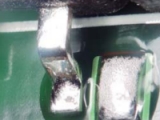
Inspection to Improve Lead-Free Solder
Paper reviews defects uncovered by a high performance inspection system and merits of capturing images of defects.
DOWNLOAD
Authored By:
Kazuo Kawai
Hirox-USA and Seika Machinery, Inc.
River Edge, NJ, USA, Torrance, CA, USA
Summary
Lead-free solders are said to cause various problems such as lack of self-alignment, bridges, solder balls, insufficient wetting, dendrites, pits, voids and peeling of soldering land. Also, on miniaturized lands, there may occur insufficient melting of solder paste. Even though these problems have not yet been resolved, lead-free soldering technologies have already been introduced at mass production sites. Most of these problems basically arise from heightened packaging temperature requirements in line with higher melting points of soldering materials.
Inspection of manufactured products to determine quality of the temperature profile and proper solder connection needs to be done with a high performance inspection system.
This technical paper and presentation will go over defects that can be uncovered by a high performance inspection system and merits of capturing images of such defects early during the assembly process. Without detection there may be a risk of damaging PCBs or parts that require rework. As well, serious quality problems or failures in the market after production may occur. The longer the lag time in detection of the defects, the higher the percentage of PCBs that may be scrapped. Therefore, inspection should take place at the earliest possible stage. Current technology available with a high end digital microscope will allow for immediate and thorough discovery of these defects which is of vital importance for SMT assembly.
Since lead-free solders were introduced to PCB assemblies, many soldering issues have arisen and for many, remain unsolved. This case study introduces the advantages of utilizing the digital microscope to identify soldering defects and root causes to improve productivity of lead-free soldering.
Although leaded and lead-free solders are different in their melting point, the basic theory in the SMT process, including temperature profiles, is still the same. However, the spreading property of lead-free solder is inferior to leaded solders. Therefore, determining good lead-free solder joints requires more detailed inspections than lead ones.
The appearance of flux residue helps to provide enough information for the temperature conditions of the solder joints being inspected. If wrong temperature conditions are used during the soldering process, there is a good chance ofvoids and insufficient spreading of solder. Observation of flux residue in addition to light reflection and shape of solder fillets are essential in the inspection of lead-free solder joints.
The following will provide the reader with many examples and various uses of a Digital Microscope as an exterior inspection as well as defect analysis tool for SMT. It is important as well to consider in the following pages, a comparison between Stereo Microscopy, lighting techniques, and use of adapters to aid inspection
Conclusions
In assessing the shape and integrity of BGA's, the light source used for inspection contributes to the information that can be gathered through external inspection and should be one of the first considerations for SMT and digital microscopy. For an optical inspection system, a halogen lamp does not provide the same image quality that metal-halide can when observing residual flux. With metal-halide, it is easy to observe light reflection of residual flux especially when using a rotational multi-angle observation lens adapter.
External visual inspection on the production line is important. The inspection system should prevent the recurrence of the defects in the most efficient and timely manner. Conventional visual inspection only judges what is good or bad and determines the product that should not be released for shipment to end users. An addition of a Digital Microscope with the ability to utilize a rotational adapter and BGA observation lens directly on the assembly line can help identify good and bad components while providing the information needed to resolve the issue behind recurring defects.
Most modern Digital Microscopes are intuitive, easily operated, provide high quality images and quick storage on multiple media. As long as a digital microscope is capable of changing the angle of view, rotating 360 degrees, and perform BGA inspection, detailed primary analysis can be done during production. These tools can become standards on the production line to aid in saving time and reducing waste. Decreasing the loss of raw materials due to recurring defects, minimalizing labor, and increasing product quality are important factors in PCB assembly.
Initially Published in the SMTA Proceedings
|