Atomristors: Non-Volatile Resistance Switching in 2D Monolayers
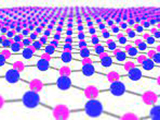
Researchers discovered the first two-dimensional material, graphene, which consists of only a single layer of atoms13.
DOWNLOAD
Authored By:
Xiaohan Wu, Ruijing Ge, Myungsoo Kim, Deji Akinwande and Jack C. Lee
University of Texas at Austin
TX, USA
Summary
Since the discovery of graphene, two-dimensional (2D) materials have drawn much attention as a promising candidate in the next-generation electron devices, optoelectronics and bioelectronics1, 2. Over the last few years, researchers have proved the existence of the non-volatile resistance switching (NVRS) behavior in various 2D materials, including graphene oxide, functionalized MoS2, partially degraded black phosphorus and multi-layer hexagonal boron-nitride (h-BN), etc. 3-6, where the resistance can be switched between a high-resistance state (HRS) and a low-resistance state (LRS) and maintained for a long time without power supply 7.
In 2015, Sangwan et al. discovered that grain boundaries in single-layer MoS2 can produce NVRS based on planar (horizontal) structure 8. However, the planar structure without 3D stacking ability has the limitation of low integration density. Therefore, to overcome vertical scaling obstacle in NVRS based on conventional metal-insulator-metal (MIM) structure, it is desired to find out the thinnest materials that can produce the resistance switching behavior based on vertical device structure.
Recently, we discovered that NVRS phenomenon is accessible in a variety of single-layer transition metal dichalcogenides (TMDs) and single-layer h-BN in vertical MIM configuration 9-12. Compared with other 2D material-based NVRS devices, single-layer h-BN has only one atomic layer and ~0.33 nm in thickness, which is the thinnest active layer in non-volatile resistance memory. These devices can be collectively labelled as “atomristor”, which means the memristor effect in atomically thin nanomaterials. The TMDs and h-BN atomristors have been studied using a crossbar or a litho-free & transfer-free structure, demonstrating forming-free switching with large on/off ratio (up to 6 orders of magnitude) and low switching voltage (down to < 1V).
In addition, the devices are proved via pulse operation with fast switching speed (< 15 ns), which is comparable to the state-of-the-art speed in 2D memristors. The non-volatile RF switches based on h-BN atomristors are realized with low insertion loss (< 0.2 dB) and high isolation (> 15 dB) up to 100 GHz. The operating frequencies cover the RF, 5G, and mm-wave bands, making this a promising low-power switch for diverse communication and connectivity front-end systems. The results of this work indicate a potential universal resistive switching behavior in 2D monolayers, which is applicable to memory technology, neuromorphic computing, RF switch and flexible electronics.
Conclusions
In conclusion, the NVRS behavior is discovered in CVD-grown monolayer TMDs and h-BN in vertical MIM configuration. The minimum thickness of all NVRS materials is reduced to 0.33 nm (monolayer h-BN). The 2D atomristors show stable bipolar and unipolar resistance switching without electroforming process, large on/off current ratio (more than 106) and fast switching speed (< 15 ns). In the end, promising applications in memory devices and RF switches are proved based on the atomically thin 2D monolayers.
Initially Published in the SMTA Proceedings
|