Enhanced Cleanability Using Fluxes with Decreased Viscosity after Reflow
A series of flux systems have been developed which would result in a reduced viscosity after reflow. This enables a high viscosity, high tack flux to be used.
DOWNLOAD
Authored By:
Runsheng Mao, Ning-Cheng Lee
Indium Corporation, Clinton, NY, USA
Fen Chen
Indium Corporation, Suzhou, China
Summary
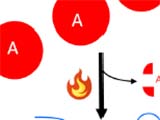
A series of flux systems have been developed which would result in a reduced viscosity after reflow. This enables a high viscosity, high tack flux to be used to secure components at the component placement and reflow stage but ends up with a low viscosity flux residue after reflow, thus facilitating the flux residue to be cleaned. A technique for forming such special fluxes is to establish a temporary association force within the materials themselves, such as an acid-base association. This kind of association force can increase the apparent molecular weight and cause material viscosity to increase. After a heating process, one of the critical ingredients was evaporated, thus eliminating the association force, causing a decrease in the apparent molecular weight, and consequently a decrease in viscosity or an increase in mobility. The evaporation of one ingredient can be the result of one ingredient having a lower boiling point, or the decomposition of one ingredient during heating. A strong association force is desired to allow this acid-base combination approach to work. In this work, the volatile ingredient approach was less effective than a decomposable ingredient approach, presumably due to the formation of a bigger association cluster from the decomposable ingredient.
Conclusions
At assembly of flip-chip or SIP, the use of a tacky flux is necessary to secure the chip during handling and reflowing of the chips. On the other hand, it is critical to remove the flux residue after reflow in order to achieve high-reliability. A series of flux systems have been developed which could result in a reduced viscosity after reflow. This enables a high viscosity, high tack flux to be used to secure components at the component placement and reflow stage but ends up with a low viscosity flux residue after reflow, thus facilitating the flux residue to be cleaned. A technique for forming such special fluxes is to establish a temporary association force within the materials themselves, such as an acid-base association. This kind of association force can increase the apparent molecular weight and cause material viscosity to increase.
After a heating process, one of the critical ingredients was evaporated, thus eliminating the association force, causing a decrease in the apparent molecular weight, and consequently a decrease in viscosity or an increase in mobility. The evaporation of one ingredient can be the result of having a lower boiling point or decomposition during heating. A strong association force is desired to allow this acid-base combination approach to work. In this work, the volatile ingredient approach was less effective than the decomposable ingredient approach, presumably due to the formation of a bigger association cluster from the decomposable ingredient.
Initially Published in the SMTA Proceedings
|