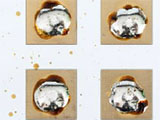
Optimization of Robotic Soldering Process: Solder Spread and Spattering
Robotic soldering is a growing market. We will present how cored wires with different flux percentages will affect robotic soldering performance.
DOWNLOAD
Authored By:
Robert McKerrow, Indium Corporation
Summary
Robotic soldering is a growing market within the PCB Assembly industry and interest in robotic soldering equipment and applications is increasing every year. This method is more efficient than hand soldering and will aid in alleviating human mistakes. The robotic soldering process is more controlled and repeatable than a selective soldering fountain, and it can increase productivity and profitability. As the industry grows, we’ve found that there is not enough published data regarding this soldering technique. In this paper, we will present how cored wires with different flux percentages will affect robotic soldering performance. All wires used in this project were SAC305 alloy with a 0.020” diameter and 3%, 3.5%, 4%, or 4.5% of flux.
Conclusions
In a robotic soldering assembly process, there will not be any direct human interaction in regard to forming the solder joint. Therefore, it is generally accepted that the assembler will want to use as much flux as possible to ensure wetting occurs and the ensuing solder joint is adequate. When the flux percentage was increased from 3% incrementally to 4.5% using the same core flux formula, there were some improvements shown in the rate of wetting and the spread of the solder. While this may be attractive when considering cycle times and overall production output, there is another factor that should be considered: spatter. In our study, it was determined that spattering is influenced by formula more than flux percentage. As can be seen in our formula control group, the spattering performance of each board is relatively similar using flux percentages ranging from 3% to 4.5%.
Initially Published in the SMTA Proceedings
|