Nano Silver Replacement for High Lead Solders
This paper details mechanical and reliability testing of joints made with materials under a range of temperature, pressure and atmosphere.
DOWNLOAD
Authored By:
Keith Sweatman, Tetsuro Nishimura
Nihon Superior Co., Ltd.
Teruo Komatsu
Applied Nanoparticle Laboratory Co., Ltd.
Osaka, Japan
Summary
While it is now widely accepted that most electronic assembly can be reliably effected with lead-free solders, a practicable alternative to the high-lead high-melting-point solders has not been available. That reality has been acknowledged by the interim exemption from the requirements of the EU RoHS Directive granted for solders with 85% or more of lead. With no direct replacement yet found by conventional alloying of elements permitted by the RoHS Directive the search for a replacement for these high-lead solders has extended to alternative joining materials.
One approach has been to take advantage of the reactivity of nano particles of silver to make a product that while ultimately having a melting point at or near the silver melting point of 961.8 degrees C can combine to form reliable connections at temperatures much lower than that. The challenge in this approach is that the very reactivity that makes the formation of a joint possible at a relatively low temperature means that the nano silver tends to be unstable.
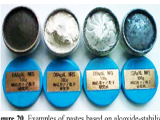
In this paper the authors report the development of a unique nano silver material that is manufactured and stabilized in an alcohol environment to produce a material that can be used to make reliable joints between a wide range of the substrates commonly used in electronics in process conditions similar to those used with high-lead solders. This material can be used to make joints to ferrous materials (e.g. stainless steel) as well as non-ferrous materials such as copper and nickel. And most importantly for component manufacture this new material bonds strongly to semiconductor materials such as silicon. Where even longer life in thermal cycling is required the silver structure can be reinforced by the addition of other materials in the form of particles of the appropriate size.
The paper will include details of mechanical and reliability testing of joints made with these materials under a range of temperature, pressure and atmosphere conditions.
Conclusions
Sufficient evidence has been accumulated to prove that nano silver manufactured in an alcohol environment and passivated with alcoxides formed by reaction with the silver atoms on the surface of the particles can provide the basis for joining materials that can be sintered at temperature comparable with those used in the reflow of high-lead solder pastes and lower. The strength and electrical and thermal conductivity of the bond so formed is at least comparable with that formed by the reflow of high-lead solder
While the nano silver so formed can be used alone it has also been shown to be possible to reduce the cost of the material and enhance mechanical properties by mixing the nano particles with sub-micron particles of silver and copper.
The temperature required for sintering the nano silver paste varies with the length of the carbon chain of the alcohol used for its passivation with sintering temperatures under 120 degrees C possible with nano silver passivated with alcohols with 2 to 6 carbon atoms although there is trade off in regard to stability. Selecting a nano silver paste formulation it is therefore a matter of choosing the balance between sintering temperature and storage and handling stability that best fits the application.
Initially Published in the SMTA Proceedings
|