|


|
|

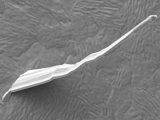
Eliminate Tin Whiskers on Component Leads
Board Talk
TranscriptPhil Jim Is there a process that can be used to re-plate component leads to add lead? Well, this is a very common topic which we discuss regularly in our technical workshops entitled lead free for the excemptee where we have people dealing with backward compatibility. Phil Jim If you look at the INEMI (http://www.inemi.org) recommendations for surface finishes, they say that matte tin over nickel is acceptable, it's all under the caveat not for high-rel applications. Phil Phil Jim Phil Jim Phil Comments
Jun 15, 2016
There is a process that can prevent tin whisker growth, but it requires a willingness on the part of the engineer to employ a process that is foreign to circuit assembly: electroless metal deposition. This process, which has been used for circuit fabrication for a half century, deposits on most conductive surfaces (including tin and solder), but not on non-conducting surfaces. (Conducting surfaces that must be protected are masked, as they are for conformal coating.)
Like cleaning, it requires immersion of a fully soldered assembly in a series of aqueous solutions. The details are available at ldfcoatings.com. I plan to make a presentation on Wednesday, June 15 and June 25 (11 AM to 1 PM Eastern Time) on the weekly tin whisker telecon that has been going on since 2002. Anyone who is interested can call in at 646-364-1285. (At the prompt, enter the code 1322078#.) The presentation viewgraphs are available in PowerPoint show and .pdf formats at dbicorpora-tion.com/twteleco.htm. The first presentation will cover facts about tin whiskers and deficiencies of present �mitigation� practices; the second will discuss the process itself.
Gordon Davy, LDF Corporation
Jul 17, 2015
Tin Whiskers can be a tough topic because everyone has their own opinion and they come up with their own stories. But I have seen it for 37 years that using a hard Urethane conformal coating will completely stop Tin Whiskers.
David K. Blanchard, Arizona Procoat LLC
Jun 8, 2010
Related to tin-lead dipping part leads, beware that you don't damage the internal structure due to thermal shock. There have been studies showing that this can happen. Sometimes you have to dip at controlled rates, sometimes damage is unavoidable. Depends on die size, materials, package size, etc.
Ted Schnetker, Sundstrand
Jun 8, 2010
Currently we use selective solder (Kiss 104) to solder mixed technology boards with bottom side surface mount parts. I have been running into customers using 5 and 6 one ounce copper layers as ground planes and tying them all to the same pins (10 mil spokes for thermal relief are used) on connectors and sockets. Subsequently there is a lot of heat and solder time need to even get 50% hole fill. Is this a normal practice for the pcb design now?
Brandon Martinelli, Altek Electronics
Jun 7, 2010
SnBi shows great promise as a lead finish to mitigate tin whiskers. This lead finish has been used by several Japanese companies without any issues. While there have been concerns that brittle intermetallics could be formed if a SnBi plated lead is used with conventional Pb-based solder, this has not been a problem when a small amount of Bi is used in the plating solution. Celestica published some studies on this topic and a new study is underway at Auburn University.
Jan Vardaman, TechSearch International, Inc.
Jun 7, 2010
Robotic hot solder dip with eutectic tin lead solder has been used successfully on many package styles. There is an industry standard that we use in aerospace and defense, GEIA-STD-0006, it covers qualification of this process. There are several vendors who offer the service including Corfin industries and Six-Sigma. This process completely removes the tin and replaces it with tin-lead.
David Pinsky, Raytheon
|
||||||||


|
Free Newsletter Subscription
Circuitnet is built for professionals who bear the responsibility of looking ahead, imagining the future, and preparing for it. Insert Your Email Address |
|


|